Wildlife Travel Guide · Marine Encounters · Updated May 2026
The Honest Guide to Swimming with Whale Sharks: What to Look For, What to Avoid, and Where in the World to Go
A destination-by-destination breakdown for nature travelers — covering encounter quality, conservation ethics, travel logistics, and what the numbers actually mean when comparing your options.
What Exactly Is a Whale Shark — and Why Do People Travel the World to Swim with One?
The whale shark (Rhincodon typus) is the largest fish on earth. Adults can reach 40 feet or more in length and weigh up to 20 tons — roughly the size of a school bus. Despite this, they are docile, slow-moving filter feeders that pose no threat to human swimmers. They have no large teeth. They don’t chase prey. They simply cruise near the surface, filtering enormous quantities of plankton-rich water through their gills.
That combination — colossal size, utter peacefulness, and extraordinary visual beauty — is why swimming with whale sharks has become one of the most sought-after wildlife experiences on earth. There is something profoundly humbling about floating beside an animal that big while it simply carries on, unbothered, doing what it has done for 60 million years.
Whale sharks are found in tropical and warm-temperate oceans worldwide, typically in waters between 70–85°F. They are most reliably encountered near seasonal plankton blooms, fish-spawning events, and nutrient-rich upwelling zones — which is why certain locations attract them predictably every year.
They are classified as Endangered on the IUCN Red List. Populations have declined significantly due to fishing pressure, bycatch, boat strikes, and habitat degradation. This makes responsible, low-impact tourism both an ethical obligation and, increasingly, a factor in where discerning travelers choose to go.
- Scientific name: Rhincodon typus — the world’s largest fish, not a mammal
- Size: Typically 18–32 feet; maximum recorded 61.7 feet
- Diet: Plankton, krill, fish eggs, small fish — filtered at up to 1,500 gallons per hour
- Lifespan: Estimated 70–150 years; reach sexual maturity around age 25–30
- IUCN status: Endangered — populations declining globally
- Mystery: Scientists still don’t know where they give birth; no whale shark birth has ever been witnessed
- Speed: Typically 2–3 mph while feeding — fast enough to outdistance a casual swimmer
- Aggregations: Generally solitary; groups of 50–500 form at seasonal feeding hotspots
What Separates a Great Whale Shark Encounter from a Mediocre One
Not all swimming with whale sharks experiences are equal — and the differences matter far more than most booking sites let on. Before comparing destinations, it helps to understand the variables that define encounter quality. These are the questions experienced wildlife travelers ask before they book.
1. How Many Encounters Do You Actually Get?
Many operators sell “swim with whale sharks” as if it’s a guaranteed, extended interaction. The reality varies dramatically. At some destinations, each boat gets one 30-minute window in a regulated zone — with a single animal, shared with multiple boats. At others, multi-day trips provide repeated outings across several days, with a realistic chance of encountering multiple individual animals each time.
If you are traveling specifically to experience whale sharks, a single brief encounter is a wonderful memory. Four or five encounters with different individuals across a week is a genuinely transformative one. Know what you are booking before you go.
2. How Many Boats Are in the Water at the Same Time?
This is arguably the single most important variable for encounter quality — and it’s rarely discussed in marketing materials. In heavily trafficked whale shark destinations, a dozen or more boats may be operating simultaneously in a small regulated zone. Each boat positions snorkelers in the water as the animal passes, then retrieves them and repositions. The animal is effectively being circled by a rotating crowd.
By contrast, locations with naturally low boat traffic — or strict limits — create something completely different: you and a few companions in open water, with a whale shark that hasn’t been disturbed by twenty other people. That experience is qualitatively different in ways that are difficult to describe until you’ve had it.
3. How Long Are You Actually in the Water with the Animal?
Regulatory limits on time-in-zone are designed to protect whale sharks — and they’re necessary and well-intentioned. But they also cap the experience significantly. A 30-minute zone limit shared across a full boatload of snorkelers means each person may get only a few minutes of actual swim time per shark. Understanding this before you book helps set realistic expectations.
4. Is the Encounter Wild — or Assisted?
This question matters more than it might seem. Some of the most popular and inexpensive whale shark destinations in the world use provisioning — feeding whale sharks by hand to keep them stationary and accessible. Research published by the Whale Shark Research Project and multiple peer-reviewed studies has documented disrupted migration patterns, significantly elevated boat-strike injuries, altered microbiomes, and chronic stress behaviors at provisioned sites. The World Wildlife Fund and major marine conservation organizations recommend avoiding provisioned whale shark encounters.
5. What Is the Group Size — and the Guide Ratio?
The number of people in the water at any one time affects both encounter quality and animal welfare. Most reputable regulated destinations limit swimmers to 4–8 per animal at once, with a guide in the water. Operators with smaller overall group sizes — 8 to 10 guests total rather than 20 — can typically offer a more personal experience, more guide attention, and less pressure on the animals. A 2:1 guest-to-guide ratio in the water is exceptional. A 10:1 ratio is common on budget tours.
6. What Happens to Your Money?
Responsible whale shark tourism is one of the most powerful economic arguments for marine conservation. When local communities earn a living from living whale sharks, they have a direct financial incentive to protect them. Look for operators that are locally owned, employ local guides and crew, hold all required government permits, follow SEMARNAT/CONANP or equivalent marine authority regulations, and actively contribute to research.
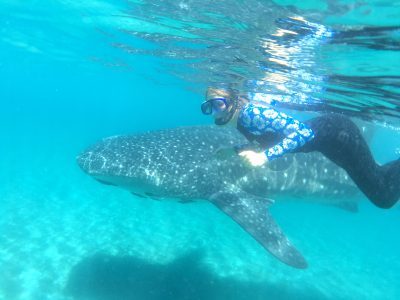
Small-group naturalist-guided encounter, Bahía de las Animas, Midriff Islands, Sea of Cortez — September 2025
Red Flags and Green Flags: How to Evaluate Any Whale Shark Operator
- Operator feeds or baits whale sharks to attract or hold them (provisioning)
- No mention of government permits, marine authority oversight, or regulatory compliance
- Group sizes of 20+ swimmers with no mention of in-water limits
- Guarantees of sightings stated as unconditional — no responsible wild operator can guarantee this
- No naturalist guide or marine biologist — just a boat captain
- Guides permit or encourage touching, riding, or blocking the animal’s path
- Multiple boats crowding a single animal with no coordination
- No wetsuit, safety briefing, or life vests provided
- Very low price with no explanation of what is or isn’t included
- Fully licensed with national marine authority — CONANP/SEMARNAT (Mexico), DBCA (Australia), etc.
- Naturalist guides or marine biologists in the water with you
- Clear, enforced minimum-distance rules (typically 6 feet / 2 meters from the animal)
- Maximum 4–6 swimmers per animal in the water at once
- No feeding, baiting, or provisioning — sharks present due to natural food sources
- Small overall group size (8–12 guests maximum)
- Pre-trip safety briefing covering wildlife interaction protocols
- Operator has established scientific or conservation relationships
- Locally owned and operated, with local crew
- Operator does not guarantee sightings — but explains what factors affect them
- Reef-safe sunscreen required or provided; single-use plastic minimized
Where in the World Can You Swim with Whale Sharks?
Whale sharks are present in tropical and subtropical oceans worldwide, but a handful of locations offer reliably accessible, high-quality encounters. Each has distinct characteristics — season, logistics, encounter format, and conservation context. Here is an honest assessment of the major destinations, in order of relevance to North American travelers.
🇲🇽 La Paz, Baja California Sur — Mexico
La Paz is the most established and heavily regulated whale shark destination in Mexico, and one of the best-managed in the world. The whale shark zone in La Paz Bay is overseen by four separate agencies, with strict permitting for boats, mandatory radio check-ins, and a seasonal operating calendar tied to actual shark counts. The zone doesn’t open until at least six whale sharks have been documented for three consecutive days.
In peak season (December–February), dozens to occasionally hundreds of animals may be present. Individual boats are permitted 30 minutes in the zone, with 10–20 boats rotating in time slots across the day. It is an excellent, well-managed experience — and the right choice for travelers who are already in Baja Sur or want a day-trip format.
- Excellent government oversight and conservation management
- Multiple reputable operators; easy to book
- Short 20-min boat ride from La Paz city
- Large aggregations (10–100+ animals) during peak season
- Can be combined with whale watching, diving, and kayaking
- Season suspended if shark count drops — protects the animals
- 30-minute zone maximum limits time with animals per session
- 10–20 boats may operate simultaneously at peak times
- Season can open late or suspend mid-season
- Requires flight from most US cities (~1 hr SD to La Paz)
- Tour-only format — hotel and logistics planned separately
🇲🇽 Bahía de las Animas & the Midriff Islands — Northern Sea of Cortez
About 380 miles south of San Diego — and 400 miles north of La Paz — lies a section of the Sea of Cortez that most whale shark travelers have never heard of. The Midriff Islands region, centered on the Bahía de los Ángeles area of northern Baja California, hosts a September–November whale shark season that is ecologically distinct from La Paz and logistically unlike any other destination in North America.
Jacques Cousteau filmed in these waters in 1963, calling the Sea of Cortez “the world’s aquarium.” John Steinbeck and marine biologist Ed Ricketts documented the region’s extraordinary biodiversity in 1940. The Midriff Islands are now a UNESCO World Heritage Site and National Marine Preserve — one of the most protected marine zones in the entire Gulf of California.
Access to Bahía de las Animas is by panga boat only — a 45-minute ride from the small fishing village of Bahía de los Ángeles. There is no road to the bay. There are no day-tour boats running from a marina. The only organized multi-day whale shark experience in this part of the Sea of Cortez is offered through a small-scale ecolodge operation that has been running since 1989, with guests staying on a 185-acre private property at the edge of the protected zone. Total boat traffic on a typical September or October morning: one to three vessels. Sometimes fewer.
How the Encounter Format Differs from La Paz
The structural difference between La Paz and Bahía de las Animas is worth spelling out clearly, because it’s the most important factor for anyone weighing these two options.
In La Paz, the whale shark zone is a designated area accessible to all permitted operators, with boats rotating through four daily time slots, each permitted 30 minutes in the zone. At peak season, the bay can have many boats operating in close proximity. The format is organized, regulated, and excellent for what it is. But it is fundamentally a day trip, and your time with any individual animal is limited by the zone clock and the number of boats around you.
At Bahía de las Animas, there are no rotating zone time slots and no cluster of permitted operators. Outings depart when conditions are right — typically mid-morning, when wind and surface visibility are optimal. A multi-day stay includes four dedicated whale shark outings across the week. Encounters average 60–90 minutes in the water per outing, often shadowing the same animal for extended periods as it feeds along the surface. Because only one to three boats are typically present across the entire bay, there is no repositioning competition and no pressure to exit the water at a countdown.
The season difference also matters: La Paz runs November through April; Bahía de las Animas runs September through November. These are entirely different seasonal windows, attracting different animals at different stages of their migration. For travelers with flexibility, it is theoretically possible to experience both.
- Adjacent to a UNESCO World Heritage Site — the Midriff Islands, one of the most biodiverse marine zones in the Americas
- Same waters documented by Cousteau (1963) and Steinbeck/Ricketts (1940)
- Snorkeling with resident sea lion colony included
- Kayaking, birding, dark-sky stargazing, desert wildlife — all from a single base
- Desert-coastal interface supports coyotes, owls, raptors, reptiles, and coastal seabirds rarely seen in more trafficked Baja zones
- No other whale shark destination in North America is accessible without a flight from the US West Coast
- September–November season — different window from La Paz; no overlap
- 1–3 boats total — among the lowest boat density of any destination worldwide
- 4 dedicated outings; 60–90 min average in-water per outing; no zone countdown
- 4–12+ individual sharks encountered across the week, typically
- Adjacent to UNESCO World Heritage Site and National Marine Preserve
- All-inclusive — accommodation, all meals, all activities included
- No flight from San Diego — 380-mile drive + 45-min panga
- Extraordinary surrounding ecosystem: sea lions, seabirds, desert, dark-sky stargazing
- SEMARNAT/CONANP permitted; WFR-certified guides in the water
- Naturalist-led; guides with 35+ years of site-specific knowledge
- Limited season: September through November only
- Boat-in access only — no road; not suitable for severe mobility limitations
- All-inclusive multi-day format costs more than a single day tour
- Smaller operation — fewer departure dates than larger destinations
- Maximum 10 guests — books out; advance planning required
- Remote location means limited nearby tourist infrastructure
🇲🇽 Isla Mujeres & Isla Holbox — Yucatán Peninsula, Mexico
The waters north of Isla Mujeres and Holbox host one of the largest seasonal whale shark aggregations in the world. Between June and September — particularly mid-June through August — hundreds and occasionally over a thousand whale sharks gather to feed on fish spawn (primarily tuna eggs) at the surface of the Caribbean Sea. This is a phenomenon unlike anywhere else on earth.
The experience is a day-boat tour, typically 6–8 hours including travel. Once whale sharks are located, snorkelers enter the water in small groups for brief swims. The scale of the aggregation is extraordinary — but the individual encounter time per animal is limited, and boat traffic at the aggregation site can be substantial during peak weeks.
🇦🇺 Ningaloo Reef — Exmouth, Western Australia
Ningaloo is widely regarded as the gold standard for whale shark snorkeling worldwide. The reef hosts a predictable annual migration from approximately March through July, with operators reporting sighting success rates around 95% during peak season. Spotter planes are used to locate animals before boats deploy, making encounters highly efficient.
The main drawback for North American travelers is geography — Ningaloo requires a flight to Perth followed by a domestic connection, and then ground transport to Exmouth or Coral Bay. Total transit: 22–26 hours each way from the US West Coast.
🇵🇭 Oslob, Philippines ⚠️ Conservation Warning
Oslob is one of the most visited whale shark destinations in the world — and one of the most controversial. Local fishermen discovered that feeding whale sharks by hand kept them stationary and accessible for tourists. The conservation community has reached a clear conclusion.
Research published by the Whale Shark Research Project and multiple peer-reviewed studies has documented: disrupted migration patterns as sharks remain near the feeding site rather than following natural food sources; significantly elevated boat-strike injuries; altered microbiomes from an artificial diet; and chronic stress behaviors. The World Wildlife Fund and major marine conservation organizations recommend avoiding provisioned whale shark encounters.
If conservation matters to you, this destination is not recommended. It is included here for transparency, not as a suggestion.
🇲🇻 The Maldives
South Ari Atoll hosts a resident population of whale sharks that remain year-round — making the Maldives one of very few places where encounters are possible in any month. Encounters are typically part of a resort or liveaboard package. Quality ranges enormously from brief resort day trips to dedicated research liveaboards with marine biologists aboard. Overall cost is high, particularly combined with international flights.
🇩🇯 Djibouti — Gulf of Tadjoura, East Africa
Djibouti is perhaps the world’s least-known world-class whale shark destination. Between November and January, whale sharks gather in the Gulf of Tadjoura near Arta Beach, feeding on zooplankton blooms. The site has very low boat traffic — sometimes single-digit numbers of visitors per day. The trade-off is logistical complexity: two or more flight connections from North America and limited tourism infrastructure.
Side-by-Side: All Major Destinations Compared
The table below compares all destinations across the metrics that matter most to serious nature travelers — including estimated all-in costs for a 6-day trip from San Diego. Baja Spirit’s Las Animas Ecolodge is included as the Sea of Cortez multi-day option.
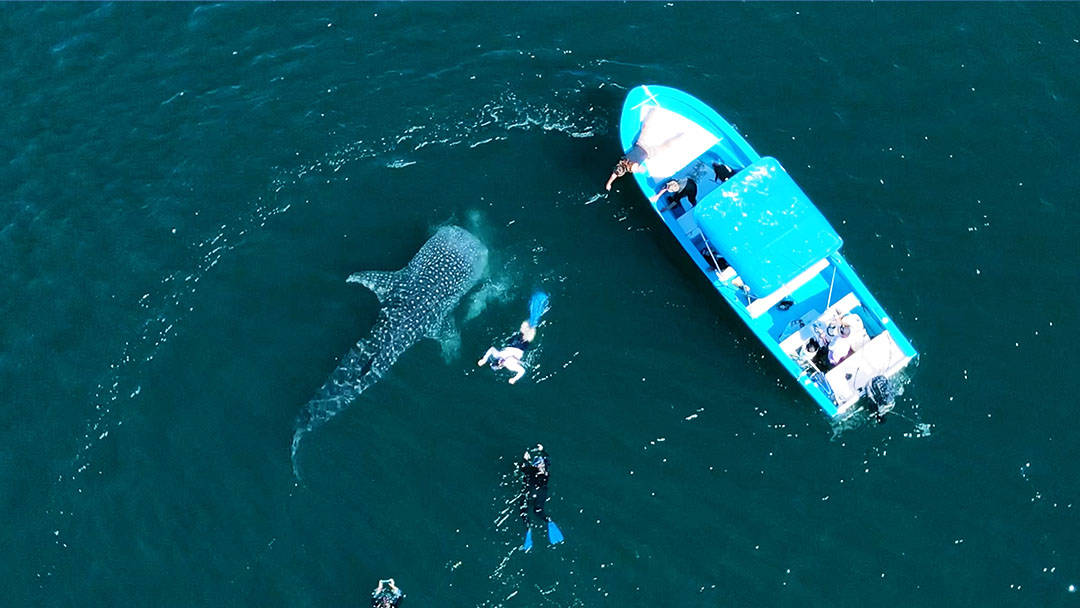
Whale shark feeding at the surface, Bahía de las Animas, Midriff Islands — Sea of Cortez
| Destination | Season | Travel from SD | Travel Time | Tour Format | Tour Cost (pp) | Est. 6-Day All-In* | Encounter Quality |
|---|---|---|---|---|---|---|---|
| 🇲🇽 Bahía de las Animas (Sea of Cortez) |
Sep–Nov | Drive + boat; no flight | ~8 hrs door-to-lodge | 6-day all-inclusive; 4 dedicated outings | Included in package | ~$3,895–$4,515 pp all-in | VERY HIGH: 4 outings; 4–12+ sharks; 1–3 boats total |
| 🇲🇽 La Paz, Baja Sur | Nov–Apr | ~1 hr flight or 17 hr drive | ~3–4 hrs (flight) | Half-day boat tour; 30-min zone max | $140–$250 pp | ~$1,500–$2,500 pp | MODERATE: 1–3 sharks; 10–20 boats in zone |
| 🇲🇽 Isla Mujeres / Holbox | Jun–Sep | Flight to Cancún + ferry | ~5–7 hrs total | Day boat tour; brief per-shark time | $125–$175 pp | ~$1,800–$3,000 pp | MODERATE-HIGH: large aggregations; crowded; short per-shark time |
| 🇦🇺 Ningaloo Reef, WA | Mar–Jul | LAX→Perth→Exmouth (2 flights) | ~22–26 hrs each way | Full-day tour with spotter plane | ~$370–$520 pp | ~$6,500–$9,500 pp | GOOD: 95% sighting rate; excellent quality; very far from US |
| 🇵🇭 Oslob, Philippines ⚠️ | Year-round | LAX→Cebu (~2 stops) | ~20–22 hrs | Feeding station — not wild | $30–$60 pp | ~$2,500–$4,500 pp | AVOID: sharks artificially fed; research documents harm ⚠️ |
| 🇲🇻 Maldives | Year-round (varies) | LAX→Malé (~2 stops) | ~20–24 hrs | Resort snorkel trip or liveaboard | $200–$800 pp | ~$5,000–$12,000+ pp | VARIABLE: year-round at South Ari; 1–3 encounters typical |
| 🇩🇯 Djibouti | Nov–Jan | LAX→Addis Ababa→Djibouti | ~20–28 hrs | Small-group expedition | $300–$600 pp/day | ~$4,000–$8,000+ pp | GOOD: uncrowded; wild feeding; very remote |
*Est. 6-Day All-In from San Diego includes roundtrip flights where applicable, 5–6 nights accommodation, and whale shark tour costs. Baja Spirit figure reflects actual all-inclusive package price. Other destinations built from 2025–2026 publicly available airfare, hotel, and tour data. AUD/USD ~0.65. Costs vary by season, booking lead time, and accommodation tier. 🟢 Green = standout value/quality. 🟡 Amber = moderate; note trade-offs. 🔴 Red = conservation concerns documented.
How to Choose the Right Whale Shark Experience for You
There is no single “best” whale shark destination — only the best one for your priorities, timeline, and budget. Use this decision framework:
| If your priority is… | Consider… |
|---|---|
| Maximum encounters with wild sharks over multiple days | Sea of Cortez multi-day ecolodge; Ningaloo (multiple in-water opportunities same day) |
| Lowest total cost for a first experience | La Paz (if already in Baja) or Isla Mujeres (if visiting Cancún area) |
| Best encounter quality with strict conservation ethics | Ningaloo Reef; La Paz; Sea of Cortez multi-day; Djibouti for adventurous travelers |
| Shortest travel time from US West Coast | La Paz (~1 hr flight) or Sea of Cortez drive-in lodge (~8 hrs from San Diego) |
| Largest number of animals visible at once | Isla Mujeres / Holbox (Jun–Aug aggregations of hundreds) |
| Year-round availability | Maldives (South Ari Atoll) |
| Most remote, crowd-free, expedition feel | Djibouti; or Sea of Cortez remote ecolodge |
| Best combined wildlife + ecosystem experience | Ningaloo Reef; Sea of Cortez (UNESCO, sea lions, seabirds, desert) |
| Family-friendly, all-inclusive, no flight required from San Diego | Sea of Cortez ecolodge (ages 5+, all meals included) |
| Avoid wildlife provisioning entirely | Any destination other than Oslob, Philippines |
Practical Guide: How to Prepare for a Whale Shark Snorkeling Experience
Regardless of where you go, the quality of your encounter depends significantly on how prepared you are. Whale sharks move at 2–3 mph while feeding — a swimmer who isn’t comfortable in open water can quickly fall behind. Here is what genuinely helps.
Physical Preparation
- Basic comfort in open water is essential — being able to swim steadily for 5–10 minutes without stopping
- Practice snorkeling before your trip; getting comfortable with the mask and breathing pattern makes a significant difference in the moment
- Strong fins help you keep pace with a whale shark; bring your own if you have them
- If prone to seasickness, take preventive medication the night before — most locations require 30–90 minutes of open-ocean boat travel each way
Behavior in the Water: Rules That Matter
- Maintain at least 6 feet (2 meters) from the animal at all times — this is both a legal requirement at most destinations and basic wildlife ethics
- Never touch, grab, ride, or attempt to redirect a whale shark — this causes measurable stress and is illegal at regulated destinations
- Do not swim directly in front of the animal’s path or beneath it — follow alongside, at the flank, and let the shark lead
- Do not use flash photography — sudden bright flashes can startle the animal and disrupt feeding behavior
- Keep fins moving steadily rather than splashing — erratic movement is disorienting and can cause the animal to dive
Managing Expectations
Even at the best destinations with the most experienced guides, whale sharks are wild animals. They can dive, change direction, or simply not appear on any given day. The factors that affect sightings include ocean temperature, plankton density, moon phase, and wind conditions. A good operator will be honest about this rather than making unconditional guarantees — what they can control is where they look, how long they search, and how many outings you have available.
The Conservation Dimension: How Tourism Affects Whale Sharks
Whale shark tourism is a genuinely powerful conservation tool — when done well. In many communities where these animals aggregate, tourism revenue has transformed whale sharks from targets of harvest into economically valuable assets whose protection makes direct financial sense. But not all tourism helps.
- Do they hold and display all required national and local marine authority permits?
- Do their guides actively enforce wildlife interaction regulations — or look the other way?
- Do they contribute to or partner with whale shark research organizations?
- Do they prohibit single-use plastics on board?
- Do they require reef-safe sunscreen?
- Do they report sighting data to government or research bodies?
- Are the animals at this site wild — or conditioned by feeding?
- Does the operator’s income depend on the long-term health of this population?
The most sustainable whale shark experiences tend to share common features: small groups, long relationships between operators and habitat, deep naturalist knowledge, and a business model tied to the health of the ecosystem rather than just throughput volume. Supporting that kind of operator — even when it costs more — is the most direct way a traveler can contribute to whale shark conservation globally.
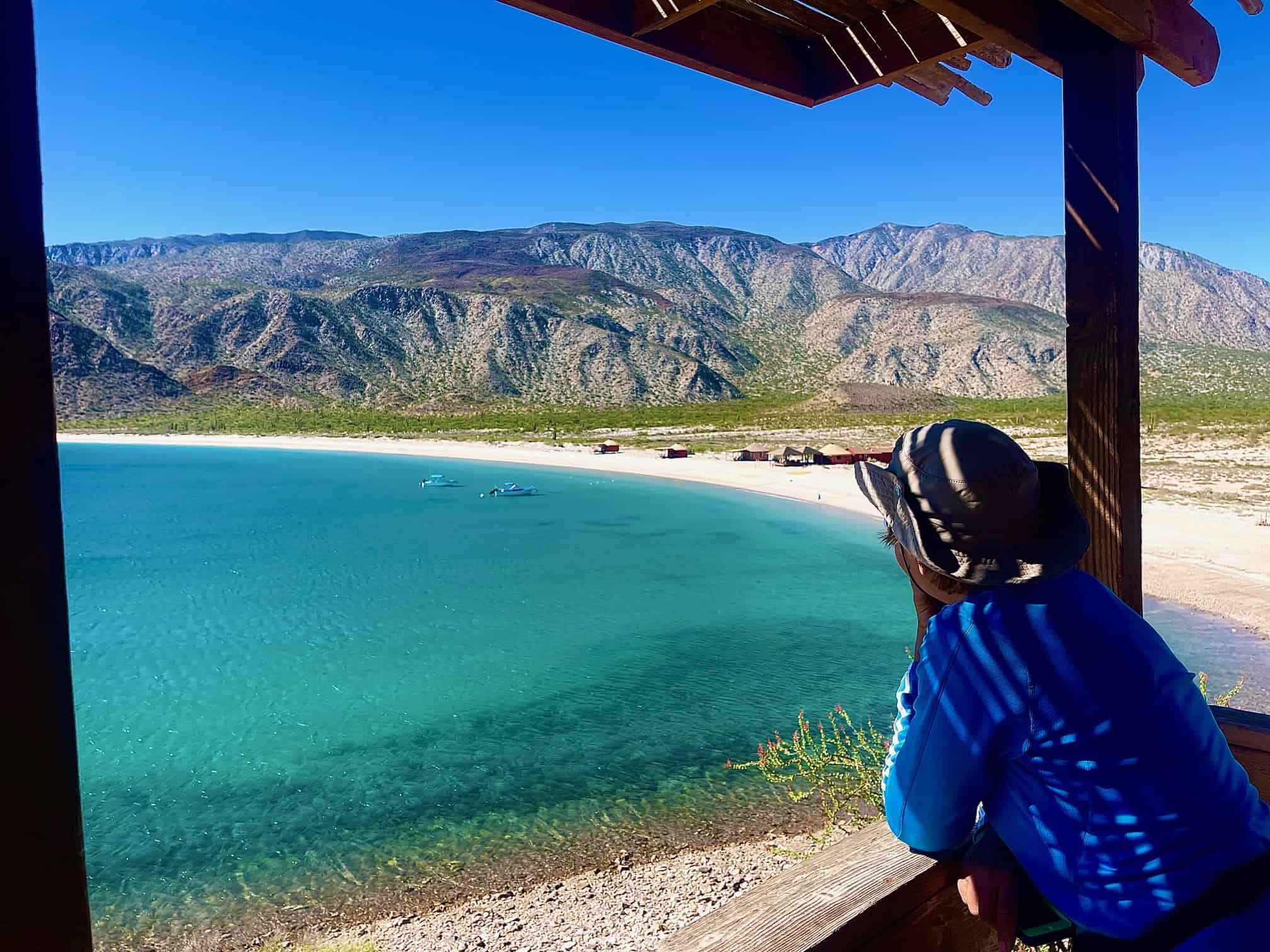
Las Animas Ecolodge — 185 acres, boat-in only, Bahía de las Animas, Midriff Islands, Baja California
Frequently Asked Questions
Q 01
Yes. Whale sharks are filter feeders with no large teeth and no predatory behavior toward humans. The primary safety considerations are ocean conditions (current, waves, seasickness) rather than the animals themselves. All reputable operators require life vests or wetsuits and have safety protocols for open-water swimming. At Las Animas Ecolodge, both lead guides hold Wilderness First Responder certification, and all vessels carry SEMARNAT/CONANP permits.
Q 02
No. Whale shark encounters are surface snorkeling experiences — the animals feed near the surface and you follow alongside at snorkel depth. No scuba certification is required. Scuba diving with whale sharks is possible at some destinations (Maldives, Ningaloo) but is not the standard format.
Q 03
It depends entirely on the destination. La Paz runs November through April. Bahía de las Animas (Sea of Cortez) runs September through November. Isla Mujeres peaks June through August. Ningaloo Reef peaks April through June. The Maldives’ South Ari Atoll has a year-round resident population. See the destination breakdown above for specifics.
Q 04
La Paz offers a regulated, excellent half-day experience (November–April) with 30 minutes maximum in the whale shark zone, typically 1–3 individual animals per outing, and 10–20 boats permitted in the area simultaneously. Bahía de las Animas via Las Animas Ecolodge offers 4 dedicated outings across a 6-day stay, typically 4–12+ individual shark encounters across the week, and only 1–3 boats total in the area. The seasons are completely different — La Paz runs November–April, Bahía de las Animas runs September–November — so they do not compete for the same travel dates.
Q 05
No responsible operator guarantees wild animal sightings. Factors that affect encounters include ocean temperature, plankton density, moon phase, and wind conditions. What a knowledgeable operator can offer is deep site-specific expertise, multiple outings to maximize your odds, and guides who know where and when to look. Any operator who offers an unconditional guarantee is a red flag.
Q 06
At most destinations, yes. Basic swimming ability is the main requirement, not age. Typical minimum ages range from 4–8 years depending on the operator. Las Animas Ecolodge accepts guests ages 5 and up. Children who are confident swimmers and comfortable in open water can have extraordinary encounters. Calmer, protected bays with low boat traffic — like Bahía de las Animas — tend to be more appropriate for younger guests than open-ocean aggregation sites.
Q 07
Yes. The whale shark is classified as Endangered on the IUCN Red List, with populations declining globally. Main threats include fishing pressure, bycatch, boat strikes, and microplastic ingestion. Responsible tourism directly supports conservation by creating economic incentives for local communities to protect rather than harvest these animals.
Q 08
Yes — it hosts two distinct whale shark opportunities. La Paz Bay (Baja California Sur) has a November–April season with strong government regulation. Bahía de las Animas in the northern Sea of Cortez, accessible via Las Animas Ecolodge, offers a September–November season with typically 1–3 boats total in the area and a multi-day format allowing repeated encounters across a 6-day stay. The surrounding UNESCO World Heritage Site makes it one of the most ecologically rich settings for any whale shark experience in North America.
Ready to Plan a Whale Shark Encounter?
September through November · 6 Days · Max 10 Guests · All-Inclusive from San Diego
Related reading:
Whale Shark Tours — Bahía de las Animas ·
Las Animas Ecolodge ·
About Baja Spirit & Our Team ·
Ecotourism in Mexico