
Gray Whale Watching Baja 2026: Why Fewer Whales Are Coming — And What It Means for Your Trip
An honest, naturalist's look at this season's gray whale numbers — and why Scammon's Lagoon currently offers the strongest odds of a mother-calf encounter in Baja California.
Video: Baja Spirit Gray Whale Watching Trips — Guerrero Negro / Scammon's Lagoon
If you're researching gray whale watching Baja 2026 has to offer, the whales are telling us something. Numbers are down across Baja California — and if you're planning a 2027 trip, here's what that actually means, told straight, from 35+ years of watching this migration in the field.
What's Actually Happening to Baja's Gray Whales
The eastern North Pacific gray whale population has been declining since a NOAA-declared Unusual Mortality Event began in 2018. NOAA lifted the formal declaration in 2023, but independent researchers argue the event never fully resolved — there are simply fewer strandings because there are fewer whales left to strand.
Population estimates have fallen from roughly 27,000 whales at their 2015 peak to approximately 12,000 as of the most recent 2026 estimate — down from about 14,500 just three years earlier — the lowest counts since surveys began in the late 1960s. Researchers point to a specific cause: warming Arctic waters are disrupting the whales' primary food source, leaving many animals without enough fat reserves to complete their roughly 10,000-mile round-trip migration to Baja's breeding lagoons.
The clearest on-the-ground evidence comes from Laguna San Ignacio, where veteran researcher Steven Swartz of Gray Whale Research in Mexico — who has studied the population for 45 years and sits on NOAA's gray whale task force — has watched the count of mother-calf pairs fall from over 100 per season at the population's peak to 20 or fewer in each of the last five years.
It's a sobering number. But it isn't the whole Baja picture — and it's a big part of why where you go this season matters more than usual.
Scammon's Lagoon vs. San Ignacio Lagoon: Where to Go in 2026
Baja's gray whales calve and breed in three primary lagoons: Laguna Ojo de Liebre (Scammon's Lagoon) near Guerrero Negro, Laguna San Ignacio, and the Bahía Magdalena complex further south. This season, the difference between the first two is stark.
Whale Numbers & Mother-Calf Pairs
- Government researchers have long documented that Ojo de Liebre hosts roughly 70% of all mother-calf pairs recorded across Baja's three primary breeding lagoons, compared with about 14% at San Ignacio and 16% in the Bahía Magdalena complex.
- Mexico's National Commission of Protected Natural Areas (CONANP) reported more than 440 whales counted in Ojo de Liebre during its sixth census of the 2026 season — a strong showing even in a down year for the broader population.
- By contrast, San Ignacio's 2026 season produced just 4 documented mother-calf pairs, per Steven Swartz's field count.
Encounter Style & Regulation
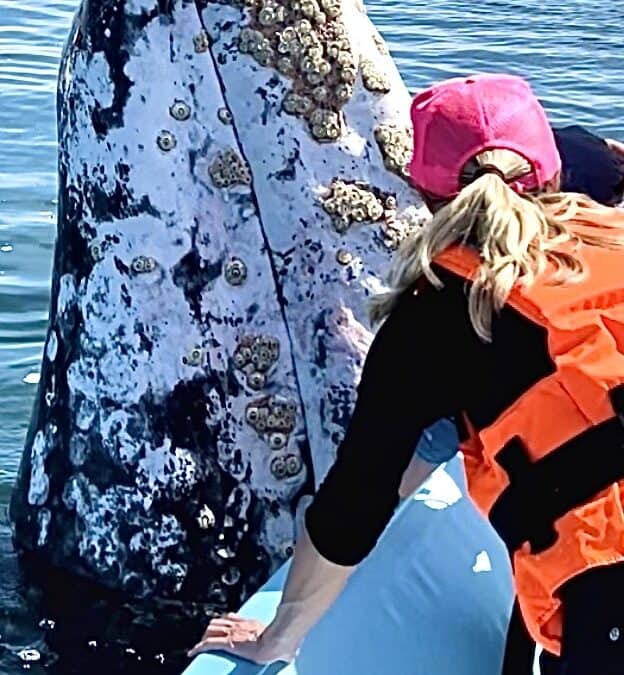
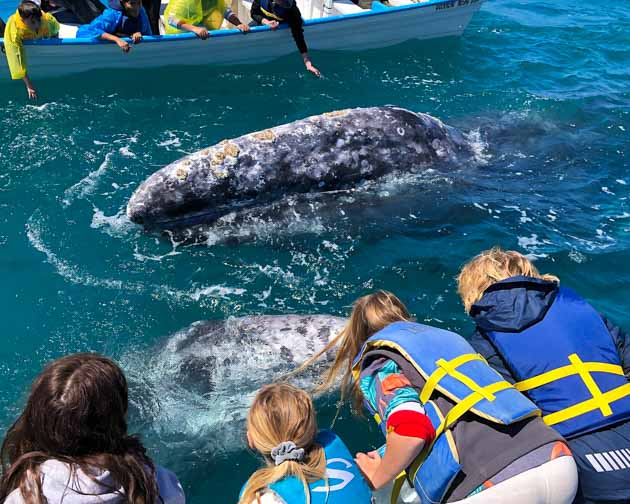
Both lagoons are known for so-called "friendly whale" behavior — animals voluntarily approaching small boats — a phenomenon scientists still don't fully understand. General travel writing often frames this as a San Ignacio specialty, but it's just as characteristic of Scammon's Lagoon, particularly among mothers and calves in the lagoon's "nursery" area. Baja Spirit guests experience a friendly encounter on roughly 100% of outings. San Ignacio is more tightly permitted, with a hard cap of roughly 20 pangas in the water reserve at a time; Scammon's Lagoon whale watching is governed under Mexican federal wildlife regulations within the El Vizcaíno Biosphere Reserve, including required minimum approach distances.
Group Size
Baja Spirit operates its Scammon's Lagoon whale watching tours with a maximum of 10 guests per departure — a small-group model built to keep our presence in the lagoon minimal and the experience personal, not a large-boat operation.
Lodging
San Ignacio Lagoon accommodations are tented eco-camps directly on the water — comfortable for a short stay, but basic. That matters more than usual during gray whale season: January through March is also Pacific storm season along Baja's west coast, and passing systems can bring cold, windy, and wet conditions to the lagoons. Conventional lodging holds up to that weather in a way canvas tents simply can't.
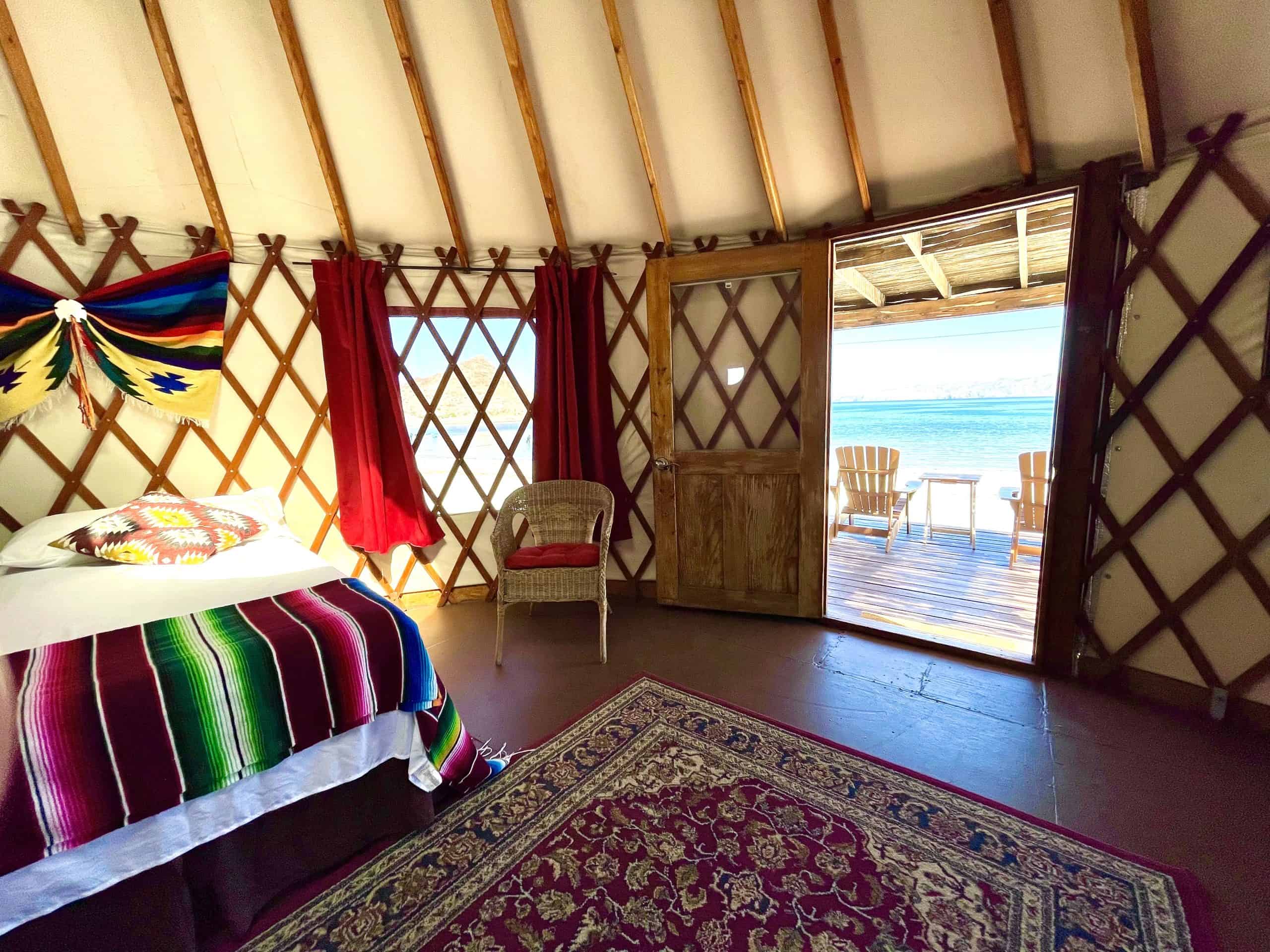
For over 20 years, Baja Spirit has partnered with a five-bedroom private bed & breakfast in Guerrero Negro with a dedicated on-site cook — real beds, real bathrooms, and home-cooked meals, paired with time at our Las Animas Ecolodge on the Sea of Cortez leg of the trip.

| Scammon's Lagoon (Ojo de Liebre) | San Ignacio Lagoon | |
|---|---|---|
| Share of Baja mother-calf pairs | ~70% | ~14% |
| 2026 Season Count | 440+ whales (CONANP census) | 4 mother-calf pairs (Swartz field count) |
| Group Size (Baja Spirit) | Max 10 guests | Varies by operator; multiple pangas typical |
| Lodging Style | Private 5-bedroom B&B, dedicated cook + ecolodge yurts | Tented eco-camp |
| Weather Protection | Solid-structure lodging — holds up to winter Pacific storms | Canvas tents exposed to Jan–Mar cold, wind & rain |
| Distance from San Diego | ~380 miles, same route as Whale Shark tour | 4+ additional hours beyond Scammon's |
| Best For | Higher sighting odds, comfort, smaller groups, family trips | Travelers prioritizing possible close/tactile encounters when whales are present |
Sources: CONANP 2026 census; Marine Mammal Protected Areas Task Force (IMMA); Sierra Club (April 2026); Baja Spirit operational data. See full source list below.
What This Means for Your 2027 Trip
Given this season's numbers, Scammon's Lagoon is currently the more reliable choice for gray whale watching Baja 2026 has produced — good news if you're already weighing Scammon's for a 2027 booking. Zero-whale outings remain rare there during peak season, even in a down year for the broader population.
Baja Spirit's 6-day "Best of Baja" itinerary also means your trip isn't riding on gray whales alone. The Sea of Cortez leg at Las Animas Ecolodge adds sea lions, dolphins, and other marine life to the experience — so a quieter whale season doesn't mean a quiet trip.
For 2027, book Scammon's Lagoon over San Ignacio Lagoon for gray whale watching in Baja California — it currently offers the higher concentration of mother-calf pairs, more consistent sightings, and weatherproof lodging during Pacific storm season.
- 2027 Season: February & March only
- Group Size: Maximum 10 guests
- Starting Price: $4,495 per person, plus Mexican tourism & National Park fees
- Lodging: Private 5-bedroom Guerrero Negro B&B + Las Animas Ecolodge yurts
Check 2027 Gray Whale Watching Availability
6 days · Maximum 10 guests · From $4,495 per person
Check Availability →Frequently Asked Questions
Full Source List
- Herring, M. "Baja's Gray Whales Were a Conservation Success Story. Because of Global Warming, Everything Could Change." Sierra Magazine, April 24, 2026. (Steven Swartz quote, San Ignacio mother-calf pair trend, population history)
- "Sanctuary Full of Life: Sixth Gray Whale Census Reports Over 440 Specimens in Ojo de Liebre this 2026." Círculo Político BCS, February 27, 2026. (CONANP official census data)
- "Western Baja California Lagoons and Coastal Waters IMMA." Marine Mammal Protected Areas Task Force, marinemammalhabitat.org. (70%/14%/16% mother-calf pair distribution, citing Urban et al. 2003)
- Marine Mammal Institute, Oregon State University. "A Special Invitation: The 2026 Baja Gray Whale Expedition." (Population estimate ~12,000)
- "Gray whales are suffering catastrophic population decline in the Pacific Ocean." Mongabay, 2026. (2019 vs. 2023 population figures)
- "Gray whale season in California, researchers warn their population is at risk." Spectrum News 1, February 2, 2026. (NOAA UME status, Alisa Schulman-Janiger/ACS-LA quote)

Have you seen the gray whales in Baja before — or are you planning your first trip?
We'd love to hear from you in the comments: Which lagoon have you visited, or are you weighing Scammon's vs. San Ignacio for 2027? Questions about the season, the trip, or what you might see are welcome too — Kevin and the team read and reply to every comment.